


How can shielding design effectively reduce the impact of electromagnetic interference on signal transmission in motorcycle main cables?
Release Time : 2026-02-28
In the complex operation and maintenance systems of modern large-scale power plants, specialized motorcycles are often indispensable tools for inspection personnel navigating between giant transformers, high-voltage switch stations, and dense cable trenches. However, power plants are typical environments with strong electromagnetic interference, filled with power frequency electromagnetic fields, high-frequency switching noise, and transient pulses. Under these extreme conditions, if the motorcycle main cable lacks an effective shielding design, the ignition signals, sensor data, and even electronic control unit commands it carries are easily interfered with, leading to engine stalling, false alarms from instruments, and even control system malfunctions. Therefore, shielding design for the main cable is not only an optimization of electrical performance but also a lifeline to ensure the safe operation of the vehicle in strong magnetic fields.
1. Multi-layer Composite Shielding Structure: Constructing a Comprehensive Faraday Cage
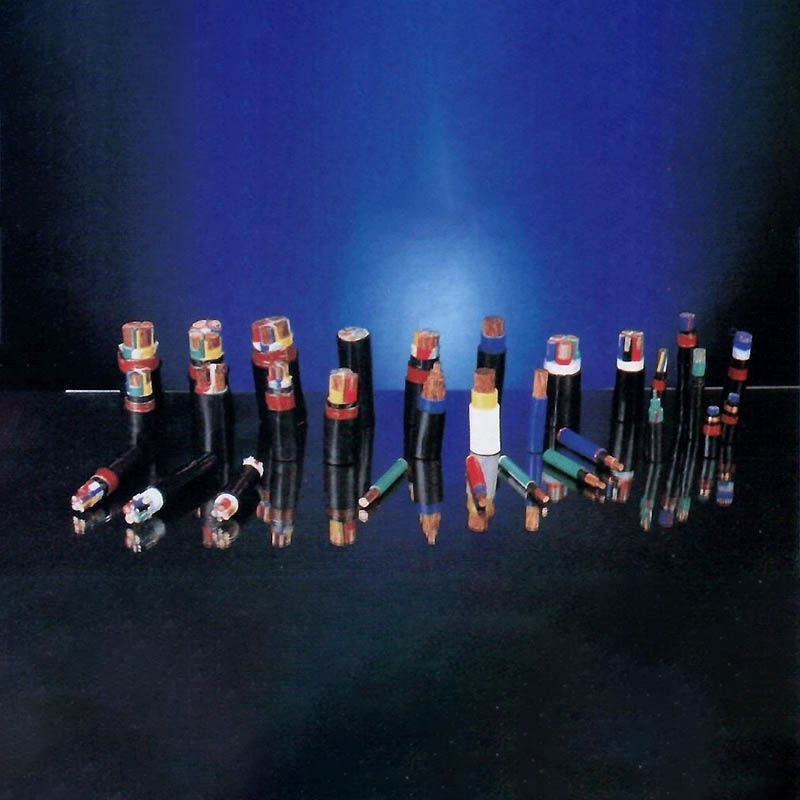
To cope with the wide-band electromagnetic interference of power plants, a single shielding layer is often insufficient. High-performance motorcycle main cables typically employ a "multi-layer composite shielding" strategy, constructing a mobile miniature Faraday cage. The innermost layer is typically wrapped with a high-permeability alloy foil strip, primarily used to resist low-frequency magnetic field interference, a major component of the power frequency electromagnetic field in power plants. This foil strip, through overlapping wrapping, ensures 360-degree coverage without blind spots, guiding external low-frequency magnetic lines of force to the shielding surface and preventing penetration into the internal conductors. Immediately outside the foil layer, a high-density tin-plated copper wire shielding mesh is woven. The copper braided layer has extremely low transfer impedance, effectively reflecting and absorbing high-frequency interference signals, such as high-frequency harmonics and radio waves generated by frequency converters. This combination of "foil layer blocking low frequencies, mesh layer protecting against high frequencies" forms a wideband defense system.
2. Grounding Topology and Termination Process: Blocking Interference Coupling Paths
The success of shielding design depends not only on the shielding material but, more importantly, on the grounding method. In the complex grounding network of a power plant, improper grounding of the cable shielding layer can create a "ground loop," introducing even greater interference current. Motorcycle main cable shielding layers typically employ a "single-point grounding" or "capacitive coupling grounding" strategy. For areas dominated by low-frequency interference, the shielding layer is grounded with low impedance at one end near the ECU or signal source, while the other end is left floating or grounded through a high-voltage capacitor. This cuts off the path of ground loop current and prevents common-mode interference caused by ground potential differences. Furthermore, the details of the termination process determine the continuity of the shielding. The shielding layer must be tightly connected to the connector housing via 360-degree ring-shaped crimp terminals; "pigtail" type lead connections are strictly prohibited.
3. Twisted Pair Cables and Spatial Layout: Physical-Level Interference Rejection Enhancement
Besides the shielding layer itself, the arrangement of the conductors inside the cable is also a crucial aspect of interference rejection design. Signal pairs in the main cable typically employ a tightly twisted structure. According to the principle of electromagnetic induction, twisted pairs ensure that the interference electromotive forces induced in adjacent twisted sections are opposite in direction and equal in magnitude, thus canceling each other out. The twist pitch is precisely calculated to match the frequency characteristics of the main interference sources in the power plant, maximizing the common-mode rejection ratio. At the vehicle wiring level, the main cable path planning follows the principle of "away from strong sources." The design utilizes the motorcycle frame's metal structure as a natural barrier, positioning the main cable away from strong radiation sources such as the generator stator and excitation system, or employing cable trays for metal isolation.
In summary, the stable operation of the motorcycle main cable in the complex electromagnetic environment of a power plant relies on a systematic shielding design. Through multi-layered composite shielding materials providing broadband protection, a scientifically designed grounding topology to eliminate ground loops, a precise twisted-pair structure to cancel induced noise, and a rational spatial layout, an impenetrable electromagnetic firewall is constructed.
1. Multi-layer Composite Shielding Structure: Constructing a Comprehensive Faraday Cage
To cope with the wide-band electromagnetic interference of power plants, a single shielding layer is often insufficient. High-performance motorcycle main cables typically employ a "multi-layer composite shielding" strategy, constructing a mobile miniature Faraday cage. The innermost layer is typically wrapped with a high-permeability alloy foil strip, primarily used to resist low-frequency magnetic field interference, a major component of the power frequency electromagnetic field in power plants. This foil strip, through overlapping wrapping, ensures 360-degree coverage without blind spots, guiding external low-frequency magnetic lines of force to the shielding surface and preventing penetration into the internal conductors. Immediately outside the foil layer, a high-density tin-plated copper wire shielding mesh is woven. The copper braided layer has extremely low transfer impedance, effectively reflecting and absorbing high-frequency interference signals, such as high-frequency harmonics and radio waves generated by frequency converters. This combination of "foil layer blocking low frequencies, mesh layer protecting against high frequencies" forms a wideband defense system.
2. Grounding Topology and Termination Process: Blocking Interference Coupling Paths
The success of shielding design depends not only on the shielding material but, more importantly, on the grounding method. In the complex grounding network of a power plant, improper grounding of the cable shielding layer can create a "ground loop," introducing even greater interference current. Motorcycle main cable shielding layers typically employ a "single-point grounding" or "capacitive coupling grounding" strategy. For areas dominated by low-frequency interference, the shielding layer is grounded with low impedance at one end near the ECU or signal source, while the other end is left floating or grounded through a high-voltage capacitor. This cuts off the path of ground loop current and prevents common-mode interference caused by ground potential differences. Furthermore, the details of the termination process determine the continuity of the shielding. The shielding layer must be tightly connected to the connector housing via 360-degree ring-shaped crimp terminals; "pigtail" type lead connections are strictly prohibited.
3. Twisted Pair Cables and Spatial Layout: Physical-Level Interference Rejection Enhancement
Besides the shielding layer itself, the arrangement of the conductors inside the cable is also a crucial aspect of interference rejection design. Signal pairs in the main cable typically employ a tightly twisted structure. According to the principle of electromagnetic induction, twisted pairs ensure that the interference electromotive forces induced in adjacent twisted sections are opposite in direction and equal in magnitude, thus canceling each other out. The twist pitch is precisely calculated to match the frequency characteristics of the main interference sources in the power plant, maximizing the common-mode rejection ratio. At the vehicle wiring level, the main cable path planning follows the principle of "away from strong sources." The design utilizes the motorcycle frame's metal structure as a natural barrier, positioning the main cable away from strong radiation sources such as the generator stator and excitation system, or employing cable trays for metal isolation.
In summary, the stable operation of the motorcycle main cable in the complex electromagnetic environment of a power plant relies on a systematic shielding design. Through multi-layered composite shielding materials providing broadband protection, a scientifically designed grounding topology to eliminate ground loops, a precise twisted-pair structure to cancel induced noise, and a rational spatial layout, an impenetrable electromagnetic firewall is constructed.