


How do speaker wires affect the fidelity of audio signal transmission?
Release Time : 2026-02-10
In high-fidelity audio systems, people often focus on the performance of amplifiers, speakers, or source devices, easily overlooking the "bridge" connecting them—speaker wires. As a key transmission medium carrying high-current, low-impedance audio signals, speaker wires are not simply conductors. Their materials, structure, manufacturing process, and even physical parameters have a subtle yet profound impact on the accuracy of sound reproduction. A high-quality speaker wire faithfully transmits the dynamic details and frequency response characteristics of the amplifier output, while inferior wires may introduce losses, distortion, or even phase shifts, quietly "polluting" the originally pure sound quality.
1. Conductor Material: Determining the Purity of Current Conduction
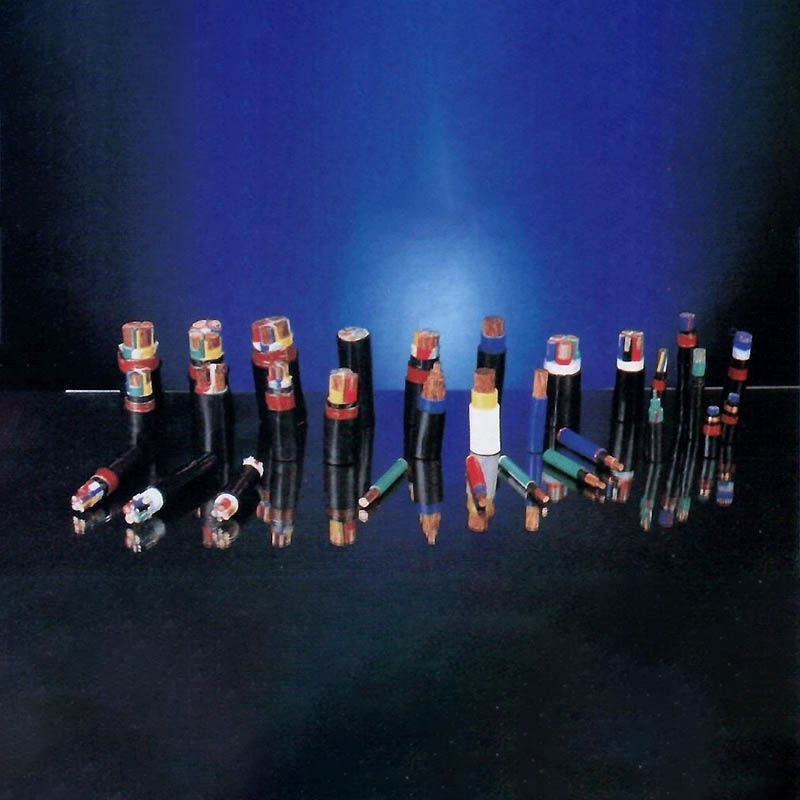
The core of speaker wires is the conductor, and its material directly affects resistivity and signal loss. High-purity oxygen-free copper (OFC) has become the mainstream choice for high-end cables due to its extremely low impurity content and excellent conductivity. Compared to ordinary electrolytic copper, OFC has more uniform internal grains, reducing electron scattering during transmission and thus reducing high-frequency signal attenuation. Some top-tier cables even use single-crystal copper or silver-plated copper to further optimize high-frequency extension and transient response. Conversely, using recycled copper or conductors with more impurities not only increases resistance but also causes "coloration" due to microscopic inhomogeneities, resulting in a muffled sound and blurred details.
2. Wire Diameter and Length: Controlling Resistance to Ensure Damping Factor
Speaker wires have inherent resistance, which forms a voltage divider with the amplifier's output impedance and the speaker's impedance, affecting the actual voltage delivered to the speaker unit. Especially at low-frequency, high-current output, if the wire diameter is too thin or the line is too long, excessive resistance will lead to power loss and weaken the amplifier's control over the speaker diaphragm—that is, a decrease in the "damping factor." This will make the bass loose and lacking in power.
3. Stranded Structure and Skin Effect Management
Audio signals contain a wide spectrum from 20Hz to 20kHz. High-frequency components are easily affected by the "skin effect"—current tends to flow towards the surface of the conductor, reducing the equivalent cross-sectional area and increasing resistance. To mitigate this issue, high-end speaker wires often employ a multi-strand twisted structure, increasing surface area and disrupting current paths for more uniform high-frequency transmission. Furthermore, a well-designed twist pitch reduces electromagnetic interference between conductors, improving channel separation. While parallel straight-line cables are cheaper, they are prone to phase deviation at high frequencies, affecting sound field localization.
4. Insulation and Shielding: Suppressing External Interference and Dielectric Loss
Although speaker wires transmit strong signals and are theoretically more resistant to interference, they can still be susceptible to noise in complex electromagnetic environments. High-quality cables use low-dielectric-constant insulation materials to reduce energy loss within the insulation layer. Additionally, some professional cables incorporate aluminum foil or braided shielding layers to effectively block radio frequency interference, preventing high-frequency hissing or increased noise floor. It's important to note that excessive shielding can increase capacitance, negatively impacting high-frequency response; therefore, a balanced design is necessary.
While speaker wires don't actively "produce sound," they are an irreplaceable part of the sound journey. They are like transparent water pipes—ideally, the water should flow through unimpeded, without increase or decrease. By carefully selecting conductors, optimizing structure, employing scientific wiring, and ensuring reliable connections, high-quality speaker wires maximize the preservation of the original audio signal's integrity, dynamic range, and spatial sense, truly achieving a high-fidelity experience where "what you hear is what you get." On the path to ultimate sound quality, a good cable deserves to be treated with utmost care.
1. Conductor Material: Determining the Purity of Current Conduction
The core of speaker wires is the conductor, and its material directly affects resistivity and signal loss. High-purity oxygen-free copper (OFC) has become the mainstream choice for high-end cables due to its extremely low impurity content and excellent conductivity. Compared to ordinary electrolytic copper, OFC has more uniform internal grains, reducing electron scattering during transmission and thus reducing high-frequency signal attenuation. Some top-tier cables even use single-crystal copper or silver-plated copper to further optimize high-frequency extension and transient response. Conversely, using recycled copper or conductors with more impurities not only increases resistance but also causes "coloration" due to microscopic inhomogeneities, resulting in a muffled sound and blurred details.
2. Wire Diameter and Length: Controlling Resistance to Ensure Damping Factor
Speaker wires have inherent resistance, which forms a voltage divider with the amplifier's output impedance and the speaker's impedance, affecting the actual voltage delivered to the speaker unit. Especially at low-frequency, high-current output, if the wire diameter is too thin or the line is too long, excessive resistance will lead to power loss and weaken the amplifier's control over the speaker diaphragm—that is, a decrease in the "damping factor." This will make the bass loose and lacking in power.
3. Stranded Structure and Skin Effect Management
Audio signals contain a wide spectrum from 20Hz to 20kHz. High-frequency components are easily affected by the "skin effect"—current tends to flow towards the surface of the conductor, reducing the equivalent cross-sectional area and increasing resistance. To mitigate this issue, high-end speaker wires often employ a multi-strand twisted structure, increasing surface area and disrupting current paths for more uniform high-frequency transmission. Furthermore, a well-designed twist pitch reduces electromagnetic interference between conductors, improving channel separation. While parallel straight-line cables are cheaper, they are prone to phase deviation at high frequencies, affecting sound field localization.
4. Insulation and Shielding: Suppressing External Interference and Dielectric Loss
Although speaker wires transmit strong signals and are theoretically more resistant to interference, they can still be susceptible to noise in complex electromagnetic environments. High-quality cables use low-dielectric-constant insulation materials to reduce energy loss within the insulation layer. Additionally, some professional cables incorporate aluminum foil or braided shielding layers to effectively block radio frequency interference, preventing high-frequency hissing or increased noise floor. It's important to note that excessive shielding can increase capacitance, negatively impacting high-frequency response; therefore, a balanced design is necessary.
While speaker wires don't actively "produce sound," they are an irreplaceable part of the sound journey. They are like transparent water pipes—ideally, the water should flow through unimpeded, without increase or decrease. By carefully selecting conductors, optimizing structure, employing scientific wiring, and ensuring reliable connections, high-quality speaker wires maximize the preservation of the original audio signal's integrity, dynamic range, and spatial sense, truly achieving a high-fidelity experience where "what you hear is what you get." On the path to ultimate sound quality, a good cable deserves to be treated with utmost care.