


How can shielding design effectively reduce the impact of electromagnetic interference on signal transmission in motorcycle main cables?
Release Time : 2026-02-06
In the modern era of automotive engineering, motorcycles have evolved from purely mechanical machines into sophisticated electronic ecosystems. The main cable harness, often referred to as the vehicle's nervous system, is responsible for transmitting critical signals between the Engine Control Unit (ECU), sensors, ignition systems, and dashboard displays. However, these signals are increasingly vulnerable to Electromagnetic Interference. Whether generated internally by the motorcycle's own high-voltage ignition coils and alternators, or externally by power lines, radio towers, and other vehicles, EMI can corrupt data, cause sensor misreads, or even lead to engine stalling. Effective shielding design in motorcycle main cables is therefore not merely a compliance requirement but a fundamental necessity for reliability and safety.
The Principle of the Faraday Cage: Material Selection and Structure
The cornerstone of effective shielding is the creation of a continuous conductive barrier around the signal conductors, essentially forming a mobile Faraday cage. This barrier works by reflecting incoming electromagnetic waves and absorbing others, preventing them from inducing unwanted currents in the internal wires. For motorcycle applications, where weight and flexibility are paramount, the choice of shielding material is critical.
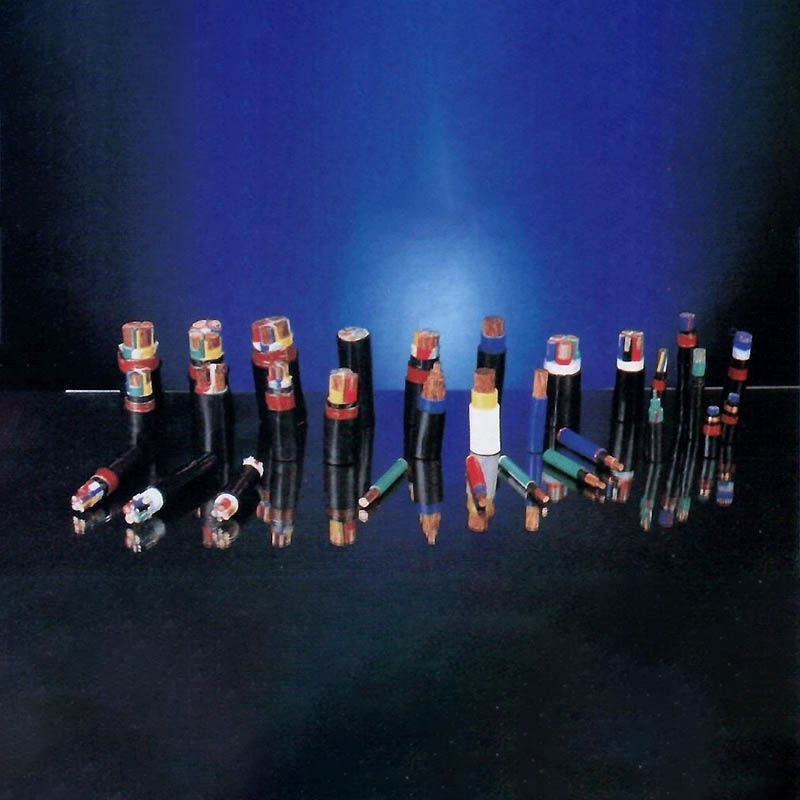
High-density tinned copper braid is the most common and effective solution. The "tinning" process coats the copper strands with tin, enhancing corrosion resistance against road salt and moisture while maintaining excellent conductivity. The density of the braid, often measured by coverage percentage (typically 85% to 95%), directly correlates to shielding effectiveness. A tighter weave offers superior protection against high-frequency interference but adds stiffness. In contrast, aluminum foil shielding provides 100% coverage and is lightweight, making it ideal for low-frequency protection, though it is less durable against repeated flexing. Advanced cable designs often employ a hybrid approach: an inner foil layer for total coverage combined with an outer copper braid for mechanical strength and high-frequency attenuation, creating a robust multi-layer defense system.
Grounding Topology: The Critical Path for Noise Dissipation
A shield is only as effective as its connection to the ground. Even the most perfectly braided cable will fail to protect signals if the induced noise currents have no low-impedance path to dissipate. In motorcycle design, grounding topology is a complex challenge due to the vibrating environment and the use of the chassis as a common ground return.
To minimize EMI, shielding must be terminated using 360-degree peripheral connectors rather than "pigtail" connections. A pigtail—a short twisted wire connecting the braid to the ground—acts as an antenna at high frequencies, re-radiating the captured noise back into the cable. A 360-degree clamp ensures the entire circumference of the shield is bonded to the connector shell, maintaining the integrity of the Faraday cage. Furthermore, the grounding point on the motorcycle frame must be clean, tight, and located close to the sensitive electronic components to prevent ground loops, which can introduce low-frequency hum and data errors. Proper isolation of the shield ground from the power ground at specific nodes can also prevent large current surges from coupling into sensitive signal lines.
Twisted Pair Geometry: Canceling Interference at the Source
While external shielding blocks radiated interference, the internal geometry of the cable plays a vital role in rejecting magnetic induction. For differential signal lines, such as those used in CAN bus communications or wheel speed sensors, twisting the positive and negative conductors together is a highly effective technique.
In a twisted pair, any external magnetic field induces a voltage in both wires. Because the wires twist positions relative to the field constantly, the induced noise voltage is identical in both conductors The receiving electronics then subtract the signal of one wire from the other, effectively canceling out the noise while preserving the actual data signal. When combined with overall cable shielding, twisted pair geometry provides a dual-layer defense: the shield handles electric field coupling and high-frequency radiation, while the twisting mitigates low-frequency magnetic induction. This synergy is crucial for maintaining signal integrity in the noisy environment near an engine's alternator and ignition coils.
Environmental Durability and Mechanical Integrity
Finally, the effectiveness of shielding design in motorcycles is contingent upon its durability. Unlike stationary industrial equipment, motorcycles are subjected to constant vibration, temperature fluctuations, UV exposure, and chemical splashes. If the shielding layer cracks, corrodes, or wears through due to friction against the frame, the EMI protection is compromised.
Therefore, the shielding layers are typically encased in high-quality thermoplastic elastomers (TPE) or cross-linked polyethylene jackets that offer abrasion resistance and flexibility. The design must account for the bending radius; excessive bending can break the fine strands of a copper braid or delaminate a foil shield. Engineers often incorporate a filler material or a central tensile member to maintain the cable's roundness and prevent the shield from collapsing under stress. By ensuring the physical integrity of the shield throughout the vehicle's lifecycle, manufacturers guarantee that the EMI protection remains consistent from the first ride to the last.
In conclusion, reducing the impact of electromagnetic interference on motorcycle main cables requires a holistic design approach that integrates material science, electrical topology, and mechanical engineering. Through the strategic use of high-coverage copper braiding and foil hybrids, the implementation of 360-degree grounding techniques, the adoption of twisted pair geometries, and the assurance of long-term environmental durability, engineers can create cable systems that are impervious to the chaotic electromagnetic spectrum. As motorcycles become increasingly autonomous and connected, the role of robust shielding design will only grow more critical, ensuring that the digital pulse of the machine remains strong, clear, and uninterrupted regardless of the external noise.